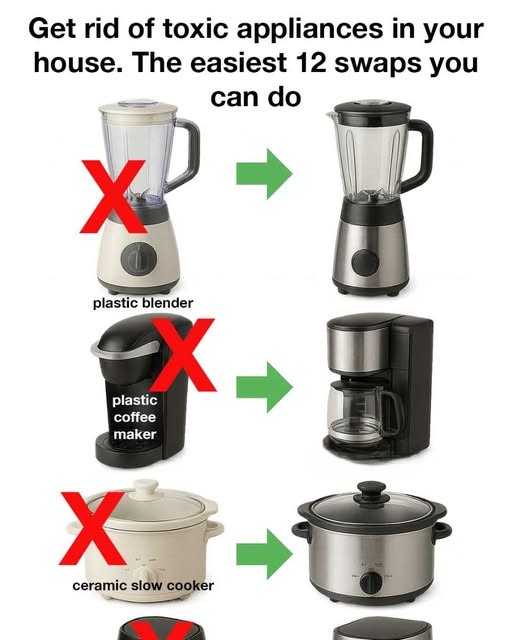
1. Swap Plastic Blenders for Stainless Steel or Glass
Plastic blenders often contain BPA, a chemical that can leach into food and beverages. By switching to blenders made from stainless steel or glass, you eliminate the risk of chemical exposure. Stainless steel and glass are both durable and non-reactive, ensuring that your smoothies and soups remain free from harmful substances.
2. Replace Plastic Coffee Makers with Glass or Stainless Steel
Many coffee makers are made with plastic components that come into contact with hot water, increasing the risk of chemical leaching. Opting for a coffee maker made entirely of glass or stainless steel ensures that your morning brew is free from toxins. These materials also tend to be more durable and easier to clean, enhancing your coffee-making experience.
3. Ditch Non-Stick Cookware for Cast Iron or Stainless Steel
Non-stick cookware often contains PFOA, a chemical linked to health issues. Cast iron and stainless steel are excellent alternatives that provide non-toxic cooking surfaces. Cast iron, when seasoned properly, offers a natural non-stick surface, while stainless steel is versatile and easy to maintain. Both options are long-lasting and can withstand high temperatures without releasing harmful substances.
4. Exchange Plastic Food Storage Containers for Glass
Plastic food storage containers can leach chemicals into your food, especially when heated. Glass containers are a safer option as they do not contain harmful chemicals and can be used in the microwave and oven. They are also more durable and do not absorb odors or stains, keeping your food fresh and safe.
5. Upgrade Ceramic Slow Cookers to Stainless Steel Models
Ceramic slow cookers can sometimes contain lead or other harmful substances in their glaze. Stainless steel slow cookers provide a safer alternative, as they do not contain these harmful materials. They also offer better heat distribution and are easier to clean, making them a practical choice for slow-cooked meals.
6. Opt for Stainless Steel or Glass Kettles Over Plastic
Plastic kettles can release chemicals into the water, especially when heated. Stainless steel or glass kettles are safer options that do not leach toxins. These materials are also more durable and provide a more aesthetically pleasing look to your kitchen.
7. Transition from Plastic Utensils to Bamboo or Stainless Steel
Plastic utensils can melt or warp, releasing chemicals into your food. Bamboo and stainless steel utensils are non-toxic alternatives that are heat-resistant and durable. Bamboo is also a sustainable resource, making it an eco-friendly choice for your kitchen.
8. Substitute Plastic Cutting Boards with Wood or Bamboo
Plastic cutting boards can harbor bacteria and release microplastics into your food. Wood and bamboo cutting boards are naturally antimicrobial and do not contain harmful chemicals. They are also gentle on knife blades, extending the life of your kitchen tools.
Continued on next page